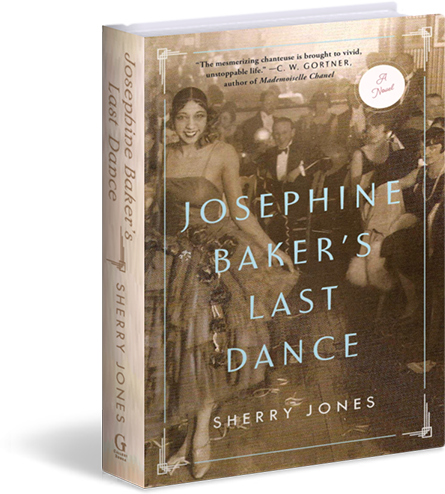
A Brand New Novel
Josephine Baker, the early-20th-century African-American dancer, comic, and singer–hugely famous in Paris. Did you know that she was also a spy for the French Resistance during WWII?

Josephine Baker, the early-20th-century African-American dancer, comic, and singer–hugely famous in Paris. Did you know that she was also a spy for the French Resistance during WWII?
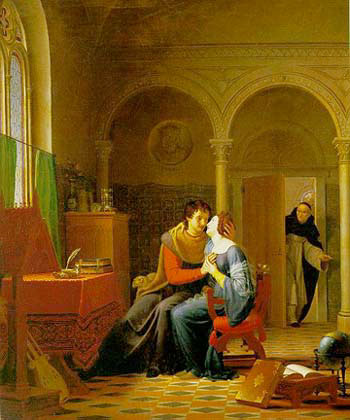
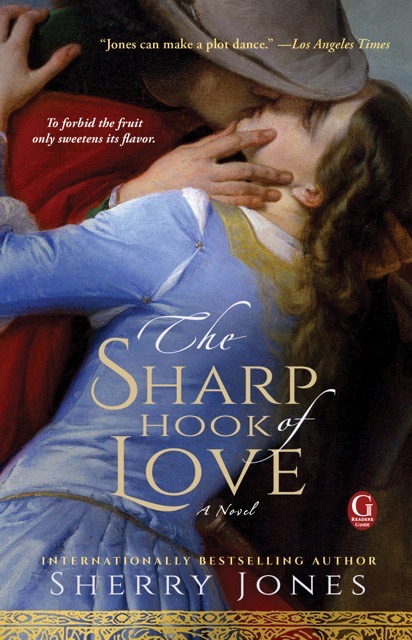
I’ve wanted for YEARS to do this.
I loved the original version of THE SHARP HOOK OF LOVE, my novel of the famed Medieval star-crossed lovers Héloïse and Abélard.
My editor? Not so much.
I’d chosen to tell the story from the point of view of Héloïse, the young student seduced by Pierre Abèlard, her older, charismatic teacher who was also regarded as the greatest philosopher of his time. Later in life, long after their scandalous relationship had ended, they began writing letters to each other—but when Héloïse talked about their love affair and her feelings for Abèlard, he shut her down.
This outraged me. Héloïse, too, felt incensed, saying Abèlard had placed the “bridle of your injunction on my tongue.”
I wanted to give Héloïse her voice back. So I wrote THE SHARP HOOK OF LOVE as a letter from her to Abèlard, penned as she lies dying. Her plan is to have the letter buried with her, to present to him in heaven. The sisters at her convent miss the memo, though, and the letter is discovered a thousand years later among the nunnery’s artifacts.
You wouldn’t believe the lengths I went to for authenticity’s sake.
Knowing that the highly educated lovers would have written in Latin, I painstakingly researched the origins of every English word that I thought might be Germanic. If it wasn’t Latinate, I changed it to a word that was.
To me, the epistolary framework made for a story that felt intimate and teeming with passion. My literary agent agreed, calling it a “tour de force”.
But my editor worried that readers would find the second-person point of view—in which Héloise addresses Abèlard directly—to be confusing and off-putting. Translation: fewer sales.
The editor advised me to rewrite the book in the third person—saying “he,” “she,” and “they” instead of “I” and “you.” I complied, reasoning that I might be too close to the book to see its flaws.
Now that I’ve found and opened the original draft, however, I wonder if I should have more staunchly defended my artistic vision.
Because it seems to me that, in sacrificing Heloise’s voice for a more commercial read, I may have given up the book’s very essence: its beating woman’s heart.
Don’t get me wrong. The published book has gotten rave reviews from respected critics. It remains among my very best works. But Héloïse deserved her own voice — and so did I. In this post, I’m giving it back to us both.
Today, on my first “Outtake Tuesday,” I present the original first chapter of THE SHARP HOOK OF LOVE. If you’ve read the published version, I’d love to know: does this voice ring more true for you, or do you like it as it is?
If you haven’t read the book? Perhaps start here, with the version I always wanted you to have.
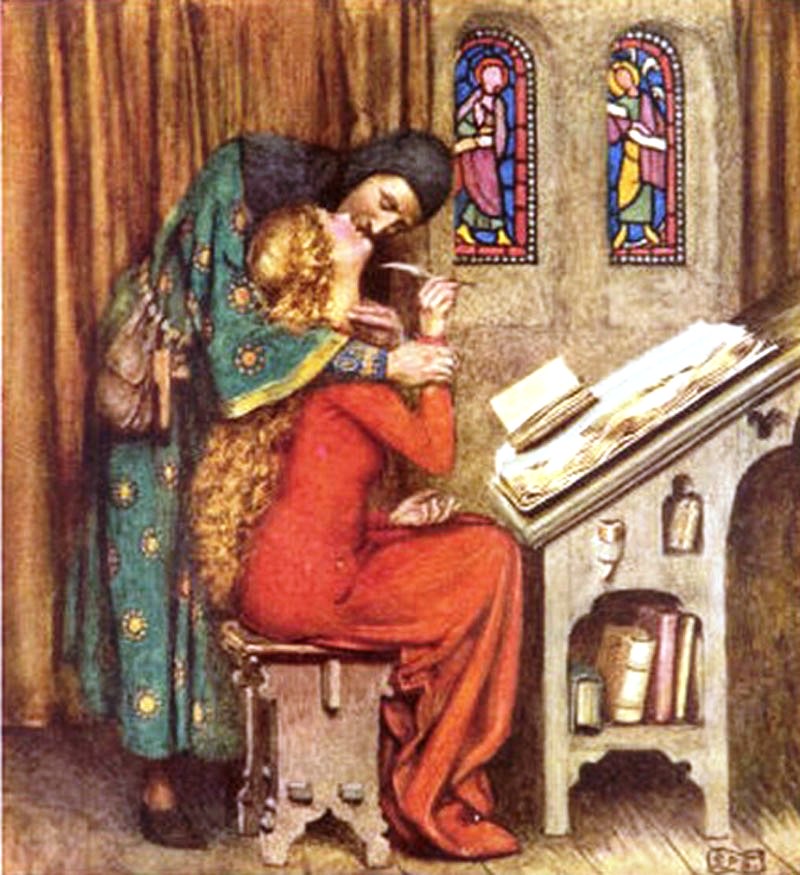
Prologue
The Oratory of the Paraclete
Aube, Champagne-Ardenne, France
1142
To my only one in death, from his only one in life: Peace at last, and at last, perfect understanding.
You arrived under the cloak of night, spirited from the tomb and carried in secret to me, your wife or, rather, sister; your lover or, rather, friend; your Héloïse. Our enemies thought to keep us apart after your death as they had done in life, but they should have known better. Even the sharpest blade could not sever the ties that bound me to you.
Sliding my hands over your coffin as though it were your smooth and sinewy body, I wished that a splinter would pierce my palm so that I might, for a moment, forget the pain of your death. I felt love, then, not as a delight — as when I first I loved you, and in all our moments together — but as a great weight. Whereas once love had buoyed me, lifting my step, now it pressed hard against my chest until I thought I might faint from want of breath. My fingers gripped the casket’s edge — a futile gesture, for I could not pry it open although I desired nothing more than to behold you one last time.
In that way, nothing has changed. I can scarcely recall a day in twenty-seven years when I have not longed for you. You eluded me always, it seemed, even when we were together. As we lay in my bed, our limbs intertwined and our breaths mingling, yet you kept a part of yourself to yourself alone. Even as you revealed to me the most private aspects of your body and poured out the yearnings of your heart as only a poet could do, you guarded aspects of yourself from my unimpeded view. You proclaimed amor, passionate love, and desire, dilectio, but neglected caritas, the deep, soul-to-soul love that God provides — until, at last, it was the only love you could give.
O, Abèlard, our days and nights together provided me with the most perfect happiness I have ever known. During those years I possessed more than I had ever dared to desire, only to lose it all, and more. How capriciously does Fortune turn her wheel, and how blind is justice! But if it takes to standing still, it ceases to be the wheel of Fortune.
All the turnings of that wheel and of the Earth itself could not alter the one constant in my life, and in yours. Master of myself until you took possession of my heart, I yet possess that which Fortune cannot take from me. My love for you is as unchanging as God himself is said to be. But, no: My love for you did change. It grew and spread and blossomed like the fragrant linden tree under which we enjoyed many blissful moments.
Do you remember that tree where we shared our first kiss? It is gone now — split, I have heard, by a bolt from Jupiter on the day we parted: at the very moment, I imagine, when the door fell shut behind you. Had I known what you would do for me someday, would I have wept so bitterly when you departed? Had I known what you would do to me, I would have begged God to end my life. Far better for me to die than to suffer the loss of you, and, worse, of your love.
Commanding me to forsake all I loved, including you, was not the harshest blow you dealt me. That came in your silence, and, when at last you did write to me, the bridle which you placed on my tongue.
Why, my love, when I responded to your Historia Calamitatum, as you called the letter you had written detailing your own – our – travails, did you admonish me not to speak of the love we’d once shared, of the sacrifices I’d made for your sake, or of your subsequent failure to repay the debt you owed? “Your old perpetual complaint,” you called my dismay over God’s unjust punishment, as if my burdens weighed less than yours.
You thought your exile — banishment to the country you abhorred, the burning of your books, the constant danger to your life — more tragic than anything I endured. But I ask you, dearest: does a hunted animal suffer more or less than one ensnared in a trap or net?
Why didn’t God punish us while we sinned? Why did he wait until after we had ceased to do so? The injustice vexes me still. After we had righted our wrongs and done all that he commanded, yet you lost a part of yourself, while I lost you, and so lost myself entirely. This oratory, built from nothing into one of the greatest abbeys in the realm, with five daughter houses; the music, poetry, and letters I have written, to much renown; the rule I created to guide my daughters, the first written especially for nuns — all I have achieved in life, I did not for God, but for you.
God knows this, and also the hypocrisy of each prayer I have uttered since that cruel stroke cut you from me. Will he punish me? Will he keep us apart in the next life as the world has done in this one? I would rather he cast me instead into the fiery lake, where my agonized shrieks would blot out, at least, the misery of living without half of myself.
And yet, failing to repent of a single moment with you, how can I expect our Lord’s mercy? I can only pray that, depriving me of you in Paradise, he might deliver this letter into your hands. Reading it, you may know all that I endured for your sake, all that I felt, and how my love for you never wavered. Ursae Minoris was not truer than I in your sky. You lost your way, Abèlard, in spite of me — although it was I who lived in darkness.
Learn more about THE SHARP HOOK OF LOVE here.
